Build Calmer Foundations


Many learners struggle with emotional regulation that disrupts sessions and slows skill acquisition. Neurofeedback helps promote calmer, more adaptive brain activity, allowing behavior analysts to start teaching sooner and maintain momentum. This strengthens ABA programs by improving initial conditions for success.
Increase On-Task Behavior


Difficulty sustaining attention can stall progress across programs. Neurofeedback reinforces healthier attention patterns, helping learners stay engaged longer. It pairs naturally with ABA interventions by improving prerequisite focus before skill-building tasks.
Reduce Impulsivity Naturally

When clients feel stuck in a fog of depression, neurofeedback helps lift that cloud by rebalancing brain activity for a better mood.
Implementing neurofeedback is simple: for example, two 20-minute sessions a week can be scheduled between talk therapy appointments without straining staff.
A 2024 meta‑analysis of 22 studies confirms neurofeedback significantly improves depressive symptoms.
Impulsivity often leads to disruptions, risk behaviors, and slower progress. Neurofeedback supports the neural foundations of inhibitory control, making it easier for learners to follow instructions and succeed in structured environments.
Strengthen Daily Functioning


Inadequate sleep can worsen irritability, inattention, and maladaptive behaviors. Neurofeedback can help guide the brain into calmer patterns associated with better sleep quality. Improved rest supports more productive sessions and steadier progress.
Support Smoother Transitions


Many learners struggle with abrupt transitions and changes in routine. Neurofeedback helps promote adaptive patterns associated with flexibility, easing transitions and reducing escalation during challenging parts of the day.
Strengthen the Base for Growth


When foundational readiness is weak, even well-designed programs stall. Neurofeedback enhances focus, calm, and engagement, allowing ABA programs to progress more efficiently. It supports the behavioral goals you’re already targeting.








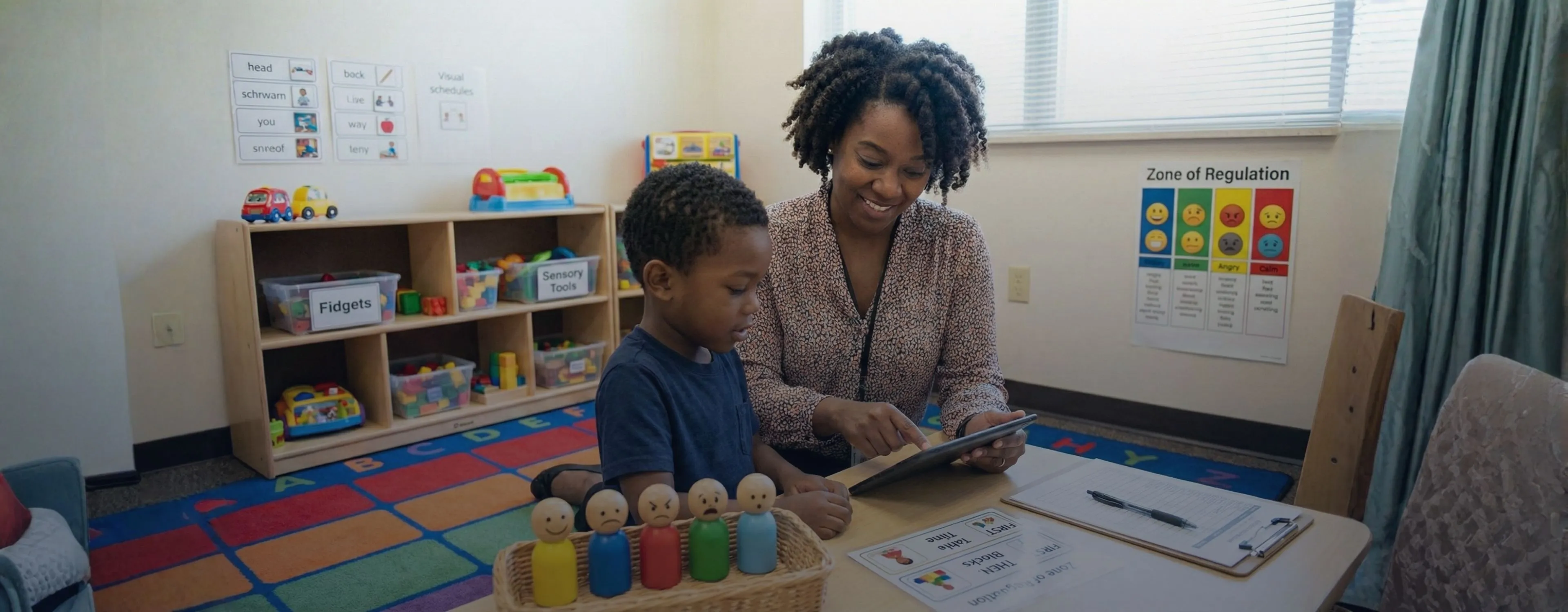


Build stronger baseline regulation for more efficient skill acquisition.
Interactive, game-like sessions motivate learners and improve cooperation.
Fewer escalations and smoother sessions reduce daily stress for clinicians and RBTs.
Differentiate your practice with a progressive, family-friendly tool that complements ABA.

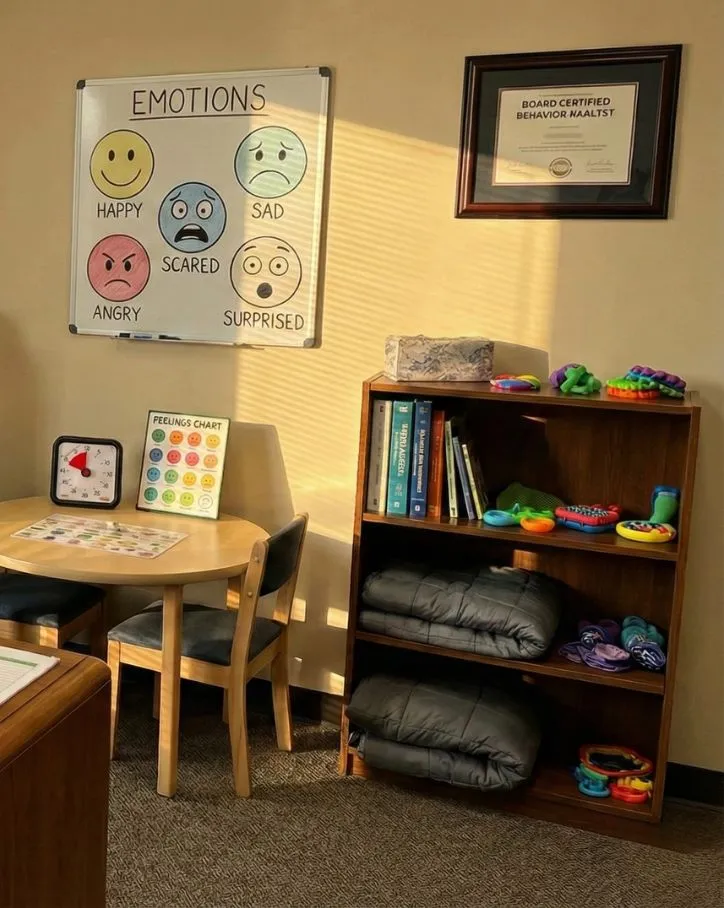
Transform Stalled Progress. Transform Your Practice.
Even the most well-designed ABA plans meet barriers when regulation or attention plateaus. Neurofeedback creates new opportunities for progress by strengthening the physiological bases of behavior.
- Personalized Brain Training
QEEG-guided protocols help target the specific regulation challenges that slow ABA progress.
- Interactive Engagement
Real-time visual feedback keeps learners motivated and cooperative.
- Non-Pharmaceutical Progress
Support improvements without altering medication plans, giving families a trusted, low-risk option.
a BrainCore Office

.svg)